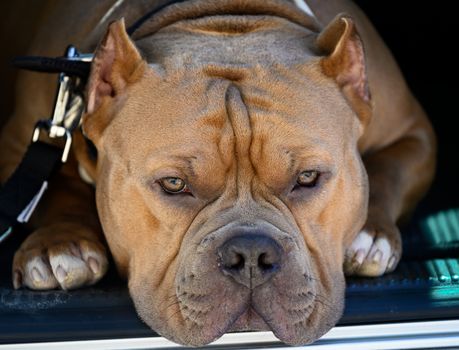
The American Bully is a breed that turns heads and sparks conversation wherever it goes. With their muscular build and striking appearance, these dogs are often misunderstood, leading to a host of myths and misconceptions. From their temperament to their legal status, rumors about American Bullies have spread far and wide—often with little basis in fact. In this article, we’ll separate truth from fiction and provide clear, evidence-based answers to the most common myths about American Bullies.
Understanding the American Bully: Origins and Reality
To debunk myths, it’s important to start with the facts. The American Bully is a relatively new breed, officially recognized by the American Bully Kennel Club (ABKC) in 2004. Developed by crossing the American Pit Bull Terrier, American Staffordshire Terrier, and other bulldog-type breeds, the American Bully was created for companionship—not for fighting or guarding.
Despite their intimidating look, American Bullies were bred to be gentle, stable, and affectionate family pets. The breed comes in four recognized sizes: Pocket, Standard, Classic, and XL, with weights ranging from about 30 to over 100 pounds. According to the ABKC, the hallmark of the breed is its "gentle and loving" temperament—a far cry from the aggressive image often portrayed in the media.
.png)
Myth #1: American Bullies Are Naturally Aggressive
One of the most persistent myths is that American Bullies are inherently dangerous or aggressive. This stereotype is not supported by breed standards or scientific research.
The American Temperament Test Society (ATTS), which evaluates the stability of dog breeds, reports that American Bullies have a temperament pass rate of 86.4%—higher than many popular breeds, including Golden Retrievers (85.6%) and Beagles (79.7%). This means that, statistically, American Bullies are less likely to show unwarranted aggression or fear than many other well-loved breeds.
Aggression in dogs is rarely a product of breed alone. The Centers for Disease Control and Prevention (CDC) emphasizes that factors like training, socialization, and owner behavior play a far larger role in determining a dog’s temperament than breed alone. When properly raised and socialized, American Bullies are loyal, affectionate, and exceptionally good with children.
Myth #2: American Bullies Are the Same as Pit Bulls
Many people believe American Bullies are simply another name for the American Pit Bull Terrier, but this is inaccurate. While the breeds share some ancestry, they are distinct in both appearance and temperament.
American Bullies were developed to emphasize a stockier build, broader head, and a more docile temperament compared to the American Pit Bull Terrier. The following table highlights key differences:
| Characteristic | American Bully | American Pit Bull Terrier |
|---|---|---|
| Origin | United States, 1990s | United States, 1800s |
| Primary Purpose | Companion | Working, sport |
| Build | Muscular, broad, compact | Lean, athletic |
| Temperament Standard | Gentle, stable, affectionate | Energetic, confident, strong-willed |
| Weight Range | 30-120+ lbs (varies by class) | 30-70 lbs |
Understanding these differences is important, as breed-specific legislation and public perception often conflate the two, leading to confusion and unfair treatment of both breeds.
Myth #3: American Bullies Are Illegal in Most Places
A common misconception is that American Bullies are banned in many states or countries due to their appearance. While breed-specific legislation (BSL) does exist, it’s important to note that most laws target "Pit Bull-type" dogs or specific breeds like the American Pit Bull Terrier.
Because the American Bully is a distinct breed with a different temperament standard, it is not explicitly mentioned in many BSLs. For example, in the United Kingdom, the Dangerous Dogs Act 1991 lists the American Pit Bull Terrier but not the American Bully. However, confusion over breed identification has led to some American Bullies being seized or misclassified under these laws.
In the United States, only 21 states have any form of BSL, and these laws are increasingly being repealed or replaced with behavior-based regulations rather than breed-based bans. The American Veterinary Medical Association (AVMA) and the CDC have both stated that breed bans are ineffective at reducing dog bites, urging policymakers to focus on responsible ownership instead.
Myth #4: American Bullies Require Excessive Exercise and Are Hard to Manage
Given their muscular build, many assume that American Bullies have boundless energy and are difficult to control. In reality, American Bullies tend to have moderate exercise needs compared to other active breeds.
Most American Bullies thrive on 30 to 60 minutes of activity per day, such as brisk walks, play sessions, or basic obedience training. Unlike working breeds like Border Collies or Huskies—which may need 2+ hours of vigorous exercise daily—American Bullies are generally content with moderate, consistent routines. In fact, over-exercising young Bullies can harm their developing joints.
Additionally, American Bullies are eager to please and respond well to positive reinforcement training. Their intelligence and desire for human companionship make them easier to train than many other breeds. A well-trained Bully is calm, obedient, and a joy to have at home.
Myth #5: American Bullies Have More Health Problems Than Other Breeds
There is a perception that American Bullies are inherently unhealthy, but the reality is more nuanced. Like many purebred dogs, American Bullies can be prone to certain genetic conditions—especially if bred irresponsibly. Common issues include hip dysplasia, skin allergies, and heart conditions.
However, reputable breeders perform health screenings and only breed dogs free from hereditary diseases. According to the Orthopedic Foundation for Animals (OFA), about 18% of American Bullies screened show signs of hip dysplasia, compared to 20% in Golden Retrievers and 19% in Boxers. Regular veterinary care, a balanced diet, and appropriate exercise can greatly reduce the risk of health issues.
It’s also worth noting that mixed-breed dogs are not immune to genetic disease, and the health of any dog depends largely on the breeder’s practices and ongoing care by the owner.
What’s True? The Real Nature of the American Bully
Separating myth from fact reveals the American Bully as a loyal, affectionate companion with a stable temperament. They are not inherently aggressive, nor are they simply "Pit Bulls" by another name. Their legal status is often misunderstood, but outright bans on the breed are rare and frequently based on mistaken identity.
American Bullies are a manageable breed with moderate exercise needs and no greater risk of health problems than other popular breeds—provided they come from responsible breeders and receive proper care. With their gentle disposition, intelligence, and devotion to family, American Bullies can make wonderful pets for a wide range of households.